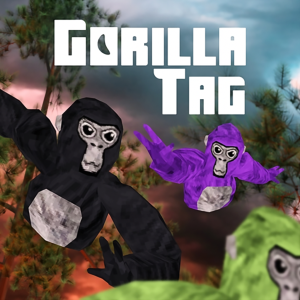
A Fresh Look at Gorilla Tag
After spending countless hours exploring the virtual landscapes of indie VR titles, Gorilla Tag has firmly established itself as a revolutionary experience that redefines motion in the gaming world. As an experienced gamer, I’ve navigated numerous innovative VR projects, yet none have captured physicality and playfulness with such raw energy. Gorilla Tag’s unconventional mechanics, where players swing and scamper through dynamic environments, offer a blend of physical exertion and immersive free play that stands apart from the typical run-of-the-mill VR shooters and adventures.
The Essence of Gorilla Tag
At its core, Gorilla Tag is a game about locomotion—a unique take on movement that demands you use your arms as your primary mode of propulsion to traverse its imaginative worlds. This energetic escapade invites you to embody the spirit of a nimble gorilla, turning the simple act of moving around into an art form. The remarkably intuitive controls allow you to grab onto surfaces and project yourself forward, providing a physical experience that closely mimics the movements of primates. For gamers who love to engage with a game that forces active participation, this is a refreshing departure from the passive button-mashing of traditional titles.
Unusual Mechanics That Inspire Movement
Gorilla Tag’s uniqueness hinges on its movement system. Instead of the conventional joystick or buttons that you might expect, you physically mimic the motions of a primate to generate momentum. The learning curve is steep if you're used to standard VR conventions, but once you master the art of swinging your arms in synchronized motions, the game transitions into a mesmerizing dance of acceleration, deceleration, and dexterity. The game challenges you to navigate a variety of environments, from intricate indoor settings to expansive open landscapes, where every route and pathway demands calculated precision.
What truly sets Gorilla Tag apart is the emphasis on physical activity, which not only makes the game engaging but also serves as an unintentional workout. As an experienced gamer who values the intersection between entertainment and physical engagement, playing Gorilla Tag is akin to merging the virtual and physical realms into one unified experience.
Aesthetics and Environmental Design
Despite its minimalist art style, Gorilla Tag is crafted with an unmistakable charm. The low-poly design and clean textures might seem simplistic at first glance, but they serve a strategic purpose by enhancing performance on multiple platforms. The light-hearted visuals complement the game’s fast-paced movement dynamics, ensuring that nothing distracts you from the core mechanics. The game’s environments are intricately designed to cue natural movement, with obstacles that unlock creative parkour-like strategies to outmaneuver opponents. It’s clear from the design that every element—from ambient lighting to the strategic placement of objects—is carefully considered to heighten immersion and fluidity of play.
Gameplay Experience and Community Impact
The experience of plummeting through loops, improvising wild acrobatic moves, and competing in furious tag scenarios is exhilarating and often surprisingly tactical. Gorilla Tag encourages both casual fun and competitive play, as it combines the spontaneity of childhood games with the strategic elements of modern multiplayer experiences. The adrenaline rush you receive during each round, whether solo or in a team, is unlike any other VR title I’ve encountered.
Another significant aspect of Gorilla Tag is its community. Gamers from all walks of life are drawn to its charm, and the forums are brimming with shared anecdotes, inventive strategies, and discussions about potential mods and even cheats that experiment with new gameplay styles. Though some may seek out these cheats and mods to alter the baseline experience, purists often prefer to stick with the original unaltered play, which continues to challenge and entertain with its inherent unpredictability.
Friends and fellow gamers often reminisce about the first time they attempted a daring leap, only to have the momentum send their virtual gorilla spiraling into an unexpected scenario. These moments of shared hilarity and frustration contribute to a robust online community that is self-sustaining and ever-evolving. The sense of camaraderie is palpable, built on the foundation of a game that is as rewarding on the social front as it is individually challenging.
Exploring the Depths: Modes and Challenges
Gorilla Tag isn’t merely about endless tag matches; it offers a variety of modes that tweak the basic mechanics into something wholly unique for every session. Whether you’re diving into a hide-and-seek variant or engaging in a more structured form of competitive play, each mode pushes you to think on your feet and adjust your approach dynamically. The replayability factor is high, making every session feel fresh and unpredictable.
Often, innovative players create new rules and challenge formats, which eventually evolve into popular variations within the community. The game’s adaptability is further boosted by a thriving ecosystem of mods that reimagine the rule set and broaden the spectrum of challenges available. These community-driven mods allow you to customize the experience, injecting even more excitement into each session.
Immersion Beyond the Play
Besides the core gameplay, Gorilla Tag stands as a testament to how VR can foster innovative ways to explore virtual worlds. Its simplicity means that no matter which platforms you choose to play on, the immersive experience remains intact. Whether you choose to download the game from the official site or install it via your favorite digital storefront, the process is overall streamlined. The game is free to participate in, which significantly lowers the barrier for newcomers to immerse themselves in its energetic environment.
Interestingly, the developers behind Gorilla Tag continue to support evolving platforms, often ensuring the experience remains accessible even in restricted or unblocked environments like school or work networks. This approach has tremendously broadened its reach, allowing users on various platforms to connect and compete. The emphasis on making the game widely available speaks volumes about the importance placed on community building and creating an inclusive playground for all enthusiasts.
Challenges and Quirks
No review would be complete without addressing a few challenges that Gorilla Tag presents for players unfamiliar with its physicality-driven control scheme. The initial adjustment period requires a bit of patience as you get accustomed to the kinetic style of gameplay. Frequent falls, unexpected swings, and an always-present chancy reliance on momentum all contribute to a learning curve that may feel steep initially. However, this same learning curve transforms into a form of mastery as you gradually refine your technique.
Moreover, while on some platforms the game runs with optimal performance, there are certain niche scenarios where the experience might suffer from minor lag or connectivity issues. Such hurdles, however, are quickly overshadowed by the invigorating sensation of perfectly timed movements and the sheer satisfaction of mastering the game’s controls.
Comparative Analysis with Similar Titles
When juxtaposing Gorilla Tag with other motion-centric VR games, its uniqueness becomes strikingly apparent. Unlike other titles that focus on combat or narrative-driven adventures, Gorilla Tag subjects the player to a raw, unfiltered form of physical exertion and improvisation. The game’s emphasis on free play contrasts with many traditional titles where the narrative or combat mechanics dominate every interaction. This inherent difference in focus makes Gorilla Tag not only an engaging multiplayer experience but also a form of digital exercise.
In the domain of VR gaming, where the immersive experience is paramount, Gorilla Tag helps redefine what it means to interact with a digital environment. The game’s focus on raw physicality translates into a genuinely interactive experience that’s near impossible to find elsewhere. Its endless replayability, bolstered by emerging mods that refine or completely rework its mechanics, continually renews the player’s interest. While other games might rely on complex storylines or intricate character developments, Gorilla Tag centers the experience squarely on the fun and physicality of movement.
Future Prospects and Developer Vision
The evolution of Gorilla Tag offers a fascinating glimpse into the adaptive nature of VR gaming. As developers continue to roll out updates and incorporate community feedback, newer mechanics and enhanced play modes seem imminent. Their willingness to support modding communities and provide unofficial pathways to cheats indicates a recognition of the need for creative freedom among its fanbase. This responsiveness has contributed to a dynamic experience where no two sessions remain the same for long.
Developers are known to engage in open dialogue with the community, ensuring that any modifications or tweaks requested by players are taken seriously. This cooperative relationship with the audience has ensured that Gorilla Tag stays relevant and consistently entertaining. While the game retains its unadulterated core premise of energetic movement, new elements are infused regularly, keeping the experience feeling fresh and unpredictable.
It is clear that Gorilla Tag is not just a passing fad but a testament to the innovative spirit of VR gaming. Its ability to continuously evolve while maintaining a faithful adherence to its central concepts underscores its potential longevity in an ever-changing entertainment landscape.
The Final Word
Gorilla Tag is an experience that defies convention. Its potent mix of exhilaration, creativity, and physical interaction reinvigorates our understanding of what VR can be. It is not simply a game to enjoy in isolation; it is a communal playground where both physical prowess and virtual acumen are celebrated. Whether you choose to download it from official sources or explore community-driven mods that push its boundaries even further, Gorilla Tag offers an unmatched experience that challenges you to think, move, and compete in entirely new ways.
For anyone seeking a free, engaging, and physically dynamic game to immerse themselves in, Gorilla Tag is a must-experience title. Its charmingly raw aesthetics paired with a sophisticated movement system ensure that it stands apart from the sea of generic VR titles. Moreover, its accessibility on multiple platforms—whether you’re on PC, Mac, Android, or even devices that might seem less conventional—is a testament to its universal appeal.
In summing up, Gorilla Tag is as much about community and creativity as it is about providing an exhilarating, active gaming experience. Its immersive design, coupled with a robust support system for mods and cheats, has cemented its place as a standout title in the VR world. This game not only tests your reflexes but also nurtures a sense of community among players who share a passion for innovative and physically engaging gameplay.
How to download and enjoy Gorilla Tag
Gorilla Tag is typically available to download from its official site as well as popular digital storefronts, making it free for anyone interested in stepping into its unique world. The game supports multiple platforms including PC, Mac, Android, and even some unsupported regions through various workarounds. To install, simply navigate to your preferred platform’s download page, click on the install button, and follow the prompts. Note that while some players experiment with cheats and mods to alter their experience, the core game is designed for fair play. Additionally, its availability on unblocked networks means you can enjoy the energetic gameplay even in environments with strict internet controls. The minimum system requirements for PC or Mac are modest; a basic VR-compatible system with an adequate processing unit and graphics card should suffice, while Android devices need to meet a minimal specification to run VR applications. Emphasis on community mods means that while adjusting the game through external software is possible, it is always wise to stick with verified sources for a stable and secure experience.
Screenshots
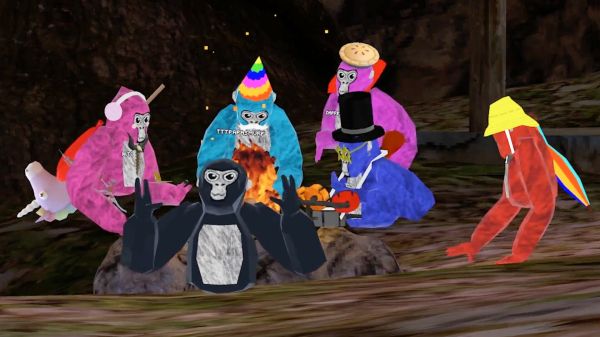
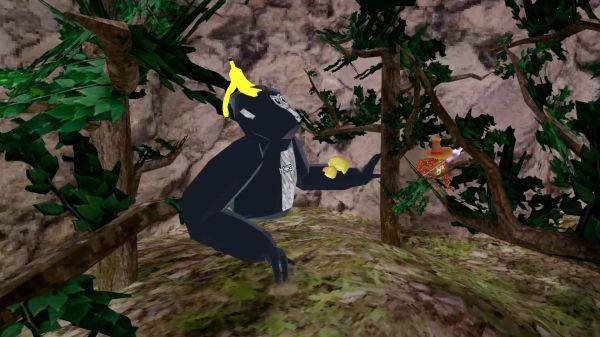
To download the app, you will get links to the Official Website and/or official digital markets.
Pros:
- Unique movement mechanics that provide an engaging physical experience.
- Multiple game modes and community-driven mods enhance replayability.
- Accessible on various platforms including PC, Mac, and Android.
- Free to download, making it easy for newcomers to try.
- Strong online community that fosters creativity and social play.
- Minimalist design that optimizes performance across different devices.
Cons:
- Steep learning curve due to the unconventional control scheme.
- Occasional performance issues or connectivity lags in certain environments.
- Physically demanding gameplay which may not suit all players.