
American University Life ~Welcome Week!~
Indie Games
All trademarks belong to their respective owners.
American University Life ~Welcome Week!~ immediately gave me a college experience that felt more like an expensive tropical vacation than the beginning of an ordinary academic year. I arrived on Leuther Island as Skye, a freshman expecting dorm rooms, crowded lecture halls, cafeteria food, and the usual nervous energy of meeting hundreds of unfamiliar students. Instead, I found luxurious accommodation, beautiful scenery, impressive facilities, and one extremely important detail that changed the entire atmosphere: there were only five students attending the university. That strange combination of privilege and emptiness became the idea that kept me interested throughout the visual novel.
I approached the game expecting a conventional campus story filled with classes, clubs, parties, and romantic decisions. What I found was much smaller and more intimate. American University Life is a kinetic visual novel, so I was primarily reading and following the story rather than constantly choosing dialogue routes or managing statistics. The limited interactivity places almost all responsibility on the writing, characters, illustrations, and atmosphere, which means the experience succeeds or struggles according to how invested I become in Skye and the unusual people sharing his first week.
From my perspective as a gamer, this is best understood as a compact slice-of-life introduction rather than a complete university simulation. It establishes Leuther Island, introduces the small cast, explores the awkwardness of new roommates learning one another's boundaries, and builds a foundation for relationships that feel as though they could continue far beyond the final scene. The game does not attempt to create a massive campus adventure with endless branching paths. Its appeal comes from spending time with a tiny group of students in circumstances that are simultaneously luxurious, strange, funny, and occasionally uncomfortable.
Leuther Island Is the First Character I Noticed
The fictional Leuther Island setting gives the visual novel much of its personality before the roommates have enough time to establish themselves. This is not the gray urban campus I usually imagine when someone says university life. The island is presented as an ecological paradise filled with advanced infrastructure, tropical scenery, modern facilities, expensive comforts, and a campus located near the beach. Every element makes the university appear almost unrealistically attractive, which is exactly why the tiny student population feels so suspicious.
I liked that contrast immediately. The environment keeps showing me reasons why thousands of students should want to attend, yet Skye discovers a campus that seems almost privately prepared for him and four other people. The resulting atmosphere is not horror, but there is a persistent sense that something about the situation is unusual. Even ordinary conversations feel different when I remember that these students have almost nobody else around their age to interact with.
The University Feels More Like a Resort Than a School
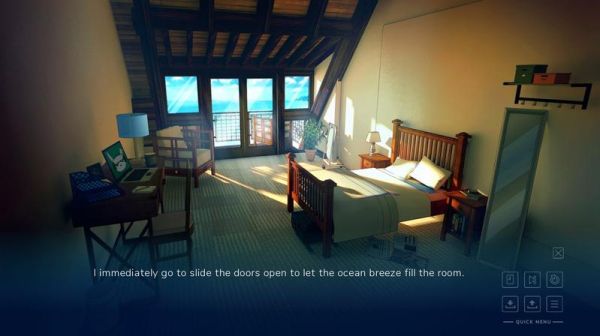
The dormitory accommodations are closer to comfortable villas than the cramped student housing I expected. The dining setup resembles a high-quality restaurant, while the campus facilities include features that would make many real universities look painfully ordinary. This exaggerated comfort supports the game's light fantasy of student independence. Skye has technically arrived for education, but the surroundings make Welcome Week feel like the beginning of an extended tropical retreat.
I found this setting effective because it creates instant social pressure. When only five students share such an enormous and luxurious campus, there are fewer excuses to remain anonymous. Everyone matters because everyone is visible. Avoiding one roommate or disappearing into another social group is much harder when the social group effectively consists of the same small handful of people.
Skye Works Best as an Entry Point Into the Group
Skye is useful as the protagonist because he arrives with approximately the same information I have. He is new to Leuther Island, new to the university, and still forming opinions about everyone around him. This allows introductions and explanations to happen naturally through his perspective. I never felt as though I had entered halfway through a story where every relationship was already established.
I also appreciated that Skye is not presented as a completely empty camera. His reactions give conversations personality, and his uncertainty about the strange university situation makes the premise easier to accept. At the same time, the kinetic format means I am following his personality rather than constructing my own version of him through choices. Players who strongly prefer self-insert protagonists may find that restrictive, while I treated him more like the lead character of a short animated series.
The Four Roommates Are the Real Focus
Once the initial surprise of the island settles, the story becomes primarily about Skye meeting and adjusting to four other students. Their personalities, habits, comfort levels, and expectations begin shaping the household immediately. Because the cast is so small, every conversation receives more weight than it might inside a visual novel containing twenty potential friends. One awkward interaction can influence the complete social atmosphere because there is no giant crowd available to dilute it.
I enjoyed how the group gradually becomes easier to understand through ordinary interactions rather than dramatic exposition. Shared meals, casual conversations, teasing, misunderstandings, and discussions about personal boundaries reveal character naturally. Welcome Week is an appropriate title because the story is interested in that transitional period when everyone is trying to appear relaxed while secretly evaluating whether the people around them will become friends or long-term annoyances.
Living Together Creates More Drama Than Attending Classes
The most interesting element for me was not the academic side of university life but the challenge of suddenly sharing space with strangers. Everyone arrives with habits that previously felt normal inside their own homes. Now those habits become visible to four other people who may have completely different expectations. Privacy, clothing, food, schedules, noise, personal space, and social boundaries all become topics that need negotiation.
This makes the story feel recognizably connected to the first-year experience even though the tropical island setting is exaggerated. University is often the first period when young adults need to manage everyday life without the household rules they grew up with. American University Life uses its unusually tiny student population to amplify that adjustment. There is nowhere to disappear when something embarrassing happens inside the shared living space.
The Writing Leans Heavily Into Awkward Comedy
Much of the humor comes from characters discovering that their assumptions about normal behavior are not universal. A casual comment can create embarrassment, and a private habit can become a group discussion simply because everyone is living so close together. The game frequently lets scenes remain awkward for longer than I expected instead of resolving them immediately. That discomfort is clearly part of the intended comedy.
I found the humor most effective when it came from personality differences rather than simply attempting to shock me. Characters reacting differently to the same situation made them easier to distinguish. Some jokes are more mature and suggestive, which fits the intended audience, but the story works better when those moments reveal something about the cast instead of existing only as adult content.
Mature Themes Are Part of the Premise Rather Than a Hidden Surprise
The visual novel is clearly intended for adult players and includes mature material involving nudity, suggestive situations, alcohol references, and sexual themes. That content should be considered part of the game's identity rather than an unexpected addition halfway through the story. The shared living arrangement creates situations where privacy and comfort levels become particularly relevant. Players looking for a completely innocent school-life comedy should understand that this is not designed as one.
I found that the stronger scenes were the ones where mature material remained connected to character boundaries and social dynamics. The fact that several young adults are living together naturally creates conversations about what people consider acceptable in shared spaces. When the game focuses on those differences, the adult content contributes to the central theme of strangers learning how to coexist. When it becomes more direct, enjoyment will depend heavily on personal taste.
The Kinetic Format Changes My Expectations Completely
American University Life is a kinetic visual novel, meaning the story progresses along a predetermined path rather than constantly asking me to select dialogue responses. This makes the experience closer to reading an illustrated novella than playing a branching dating simulator. I can advance the text, observe scenes, and follow the relationships, but I am not deciding Skye's personality at every important moment. The distinction is important because players expecting numerous routes may otherwise feel that something is missing.
I personally adjusted quickly because the story is short and focused. Without constant choices, the writing can maintain a specific rhythm and ensure that every character receives the intended introduction. However, I occasionally wanted the opportunity to respond differently during awkward conversations. A university-life premise naturally invites personal decision-making, so the absence of branching can feel slightly restrictive even when it is intentional.
Not Having Choices Makes Character Chemistry More Important
When I cannot alter the direction of conversations, I need to enjoy listening to the characters themselves. Fortunately, the small cast gives the story room to establish different personalities and interpersonal dynamics. I began anticipating how certain roommates would respond when another introduced a controversial topic. Familiarity gradually replaces the uncertainty of the opening scenes.
The limitation is that a character I enjoy less cannot simply be avoided through another route. Everyone is part of the same small community, so the story expects me to spend time with the whole group. In a larger visual novel, this could become frustrating. Here, the short length prevents any one personality from dominating the experience long enough to become exhausting.
The Small Cast Gives Conversations Room to Breathe
Having only five students sounds almost absurd from a university perspective, but it is useful from a storytelling perspective. The game does not need to introduce dozens of names, clubs, professors, and side characters during the opening hours. I quickly learned who everyone was and how their personalities differed. This allowed later jokes and interactions to rely on familiarity rather than repeated explanations.
I enjoyed the feeling of gradually becoming part of one very unusual household. The cast begins as a collection of strangers, but repeated shared experiences create an emerging group identity. A larger student population might make the campus feel more realistic, yet it would weaken the intimacy that makes this particular premise distinctive.
The Empty Campus Is Both Funny and Slightly Unsettling
There is something inherently strange about a university with luxury facilities and almost no students. Huge spaces feel different when they exist for only five people. A dining hall becomes practically private, recreational facilities have no queues, and the campus begins resembling a playground created specifically for the main cast. The situation is desirable and suspicious at the same time.
I liked how the game lets that weirdness remain part of the background without turning the story into a mystery thriller. Nobody needs to discover a secret laboratory for the emptiness to feel unusual. The atmosphere simply makes every social interaction more intense. These five people are not merely classmates; they are almost the entire visible community of the university.
The Tropical Setting Softens the Social Tension
Bright scenery and vacation-like architecture prevent the story from feeling claustrophobic even though the social circle is extremely small. Characters can move through beautiful outdoor spaces and impressive facilities instead of remaining trapped inside one dormitory room. The island aesthetic gives awkward conversations a lighter visual backdrop. Even uncomfortable moments occur inside an environment designed to feel relaxing.
I appreciated this balance because the game could easily become too enclosed. A tiny cast plus one shared residence might feel like a stage play with limited scenery. Leuther Island provides enough visual variety to suggest a larger world beyond the household. The campus remains part of the fantasy even when the characters are the real attraction.
The Background Art Sells the Luxury Fantasy
Visual novels depend heavily on static environments because players spend significant time looking at the same locations while reading dialogue. American University Life uses its backgrounds to establish comfort, tropical warmth, and the exaggerated quality of the university. Residential spaces look inviting, while campus facilities reinforce the question of how such an impressive institution ended up with almost nobody attending it. The scenery does narrative work without needing constant description.
I liked stopping occasionally to look at the environments after a scene changed. The game is not visually extravagant by modern standards, but the backgrounds are clear enough to establish location and mood. The tropical palette distinguishes the title from school visual novels built around familiar Japanese classrooms or generic American campuses. Leuther Island feels intentionally separated from ordinary university life.
Character Art Carries Most of the Emotional Information
Without voice acting, animated cinematics, or complex gameplay, facial expressions and character illustrations need to communicate reactions clearly. Changes in posture and expression help conversations remain readable even when the text becomes lengthy. Embarrassment, amusement, surprise, irritation, and curiosity are usually easy to identify. The art supports the tone rather than competing with the writing.
I found the designs memorable enough to identify characters quickly, which is essential in a dialogue-heavy game. Their appearances also reinforce personality differences without becoming overly elaborate. The visual style clearly belongs to an indie visual novel from its era, but consistency matters more than technical complexity here. The characters need to remain pleasant to look at across many dialogue screens, and they generally do.
No Voice Acting Makes Reading Speed Completely Personal
The game relies on written English rather than full voice performances. This gives me complete control over pacing because I can advance quickly through straightforward dialogue and slow down during more important scenes. It also means personality depends entirely on writing and visual expression. There is no actor available to rescue a line that reads awkwardly.
I personally did not mind the absence of voices because the game is compact. In longer visual novels, hours of silent dialogue can sometimes feel tiring. Here, the short structure makes reading manageable. A stronger soundtrack and expressive character art help fill the space that spoken performances might otherwise occupy.
The Music Supports the Relaxed Campus Mood
The soundtrack generally complements the light slice-of-life atmosphere instead of demanding attention. Music provides enough energy to prevent long conversations from feeling completely static, while calmer tracks fit the tropical setting and everyday interactions. The score functions more as emotional background than as a collection of dramatic themes. That approach matches a story centered on Welcome Week rather than an epic conflict.
I found the music most effective when it reinforced the contrast between an awkward conversation and the absurdly pleasant surroundings. Everything can look and sound relaxing while the characters struggle to understand one another. The soundtrack keeps the game approachable even when mature or uncomfortable topics appear. It helps preserve the impression that these are young adults figuring out independence rather than characters trapped in a dark drama.
The Interface Stays Out of the Way
Visual novels benefit from simple interfaces because most of the player's attention should remain on text and artwork. American University Life follows familiar controls for advancing dialogue, saving, loading, and adjusting preferences. I did not need significant time to understand how to continue. The lack of complicated systems suits the kinetic structure.
I appreciate when a visual novel does not cover half the screen with unnecessary icons. The game already has limited interactivity, so elaborate menus would create expectations it does not intend to satisfy. Basic reading functions are far more important. The interface behaves like a frame around the story instead of another activity.
Saving Is Less Strategically Important in a Linear Story
Branching visual novels often make save files essential because I want to return to major choices and explore another route. Welcome Week does not require that behavior to the same degree because the narrative remains linear. Saving mainly supports session management rather than route experimentation. I can stop reading and continue later without worrying about choosing another branch.
This makes the game relaxing but also reduces replay motivation. Once I have followed the story, there are fewer mechanical reasons to immediately begin again. A second reading can still reveal character details I missed, but the scenes themselves remain largely familiar. The value therefore depends on whether I enjoyed the cast enough to revisit them.
The Short Length Works for the Premise
Welcome Week presents itself as a compact introduction, and that title sets an appropriate expectation. The story is not trying to cover Skye's complete university career. It focuses on arrival, discovery, first impressions, and the beginning of relationships. The limited scope makes the unusual premise easier to sustain without inventing unnecessary drama.
I appreciated being able to complete the story without dedicating dozens of hours to every conversation. The downside is that some relationships feel as though they are becoming interesting just as the experience begins moving toward its ending. I wanted more time with certain characters and more exploration of the island. The short length feels intentional, but it also makes the game resemble a first chapter of something larger.
Welcome Week Is More About Beginnings Than Resolutions
The strongest theme is transition. Every student arrives with expectations about university, independence, friendship, and personal freedom. The unusual campus immediately disrupts those expectations. They are forced to define what living together will actually look like rather than following established social routines.
I liked that the game allows relationships to feel unfinished. People do not become lifelong friends after one conversation, and every awkward moment does not receive a perfect resolution immediately. Welcome Week should feel temporary because it represents the period before routine develops. The visual novel captures that uncertainty better than it captures any conventional academic experience.
Friendship Develops Through Repetition
The characters spend so much time together that familiarity forms quickly. Repeated meals, shared spaces, and ordinary conversation create a rhythm that gradually feels less formal. Jokes become easier because personalities are understood, and disagreements carry more weight because nobody remains a complete stranger. The story uses proximity as its main relationship mechanic.
I found this believable despite the unrealistic campus population. Put five people in a luxurious isolated university environment and they would probably learn one another's routines extremely quickly. The story does not need elaborate external events to force them together. Their living situation does that automatically.
Boundary Discussions Give the Story More Substance
One aspect I found more interesting than the mature comedy was the repeated idea that everyone defines privacy and comfort differently. Living independently does not mean living without rules. It means the group now needs to create its own rules instead of inheriting them from parents or previous households. That is a surprisingly appropriate theme for a college story.
The mature content gives these conversations additional importance because misunderstandings can become uncomfortable quickly. The characters need to communicate rather than assume everyone shares the same attitude. When the writing focuses on this negotiation, the game feels more thoughtful than its provocative presentation initially suggests. The shared villa becomes a small experiment in adulthood.
The Game Is Not Really About Studying
Anyone expecting detailed lectures, assignments, examinations, or academic management should adjust expectations. The university serves primarily as the setting for social independence rather than a simulation of education. Welcome Week naturally takes place before classes become the center of daily life, so this emphasis makes sense. Still, the title may suggest a broader campus-life experience than the short visual novel actually provides.
I was comfortable with that once the premise became clear. The interesting question was never whether Skye could maintain a perfect grade average. It was how five students would create a social world inside an almost empty institution. Academics remain part of the context rather than the primary mechanic or conflict.
Leuther Island Could Support a Much Larger Story
The fictional setting contains enough unusual details that I frequently wanted the story to explore it more deeply. An ecological island with advanced infrastructure, luxury tourism, wealthy residents, and a strangely underpopulated university raises many questions. Even mundane locations could support additional episodes. The setting feels larger than the amount of narrative available in Welcome Week.
This is both a compliment and a limitation. A weak setting would make me happy to leave quickly, while Leuther Island made me want additional stories beyond the roommates' introduction. I wanted to understand how ordinary residents viewed the university and what student life would look like after the novelty disappeared. The game successfully creates curiosity without having enough length to satisfy all of it.
The Premise Creates an Almost Sitcom-Like Structure
Five distinctive young adults sharing an unusually luxurious space naturally creates the foundation for episodic comedy. One character introduces a problem, another reacts badly, and the remaining roommates become witnesses or participants. The campus provides additional locations without changing the core group. I could easily imagine the story continuing through self-contained episodes.
I enjoyed this quality because it keeps the visual novel relaxed. Not every scene needs to advance a major plot mystery. Watching personalities collide can be enough. The cast carries the experience more like a small television ensemble than characters inside a traditional adventure game.
The Lack of Major Gameplay Keeps the Focus Extremely Narrow
There are no complicated exploration systems, skill checks, combat mechanics, or resource management layers competing with the dialogue. This makes the visual novel easy to consume but difficult to recommend to players who need constant interaction. Reading is the central activity. The game asks me to care about what is being said rather than how efficiently I can manipulate a system.
I enjoy kinetic visual novels when I want a more passive gaming session. They sit somewhere between interactive fiction and illustrated television. American University Life fits that mood well because its colorful environments and social writing are easy to follow without demanding intense concentration. Players seeking mechanical depth will probably find very little here.
The Price Makes More Sense When I Treat It as a Short Story
Because the experience is compact, I would evaluate its value more like a small indie visual novel than a full-size campus simulator. The amount of gameplay is limited, and replayability is naturally low due to the linear format. What I am paying for is the artwork, writing, setting, and time spent with the characters. That calculation depends heavily on whether the premise sounds appealing before purchase.
I would not recommend entering specifically for dozens of hours of branching romance content or complex university management. That is not what Welcome Week provides. For someone who enjoys short slice-of-life visual novels and unusual social setups, the focused scope can be an advantage. The story knows that it is an introduction and generally avoids stretching itself artificially.
The System Requirements Match the Lightweight Design
The game is technically modest, which fits its visual-novel structure. It does not rely on advanced three-dimensional rendering, complex simulations, or rapid input. Most suitable desktop systems can handle the combination of static backgrounds, character art, music, and text without difficulty. Storage demands are also small compared with modern games.
I appreciate lightweight visual novels because they are easy to launch when I want a quiet session without preparing a powerful system. Performance is not part of the challenge. The more important compatibility concern is operating-system support for an older indie release. Players using newer systems should always confirm that the current storefront version remains compatible with their setup.
The English-Only Presentation Limits Accessibility
The game depends heavily on reading, so language support matters far more here than in an action title where mechanics can carry the experience. English is the primary supported language, meaning players uncomfortable with long conversations may struggle to enjoy the story fully. There is little gameplay available to compensate for missed dialogue. Understanding character nuance is essential.
I found the writing generally straightforward enough to follow without constantly rereading. Casual conversation dominates the script, which fits the college setting. Mature humor and personality differences still rely on tone and phrasing. Translation into additional languages would make the visual novel much more accessible to the audience most interested in its social premise.
Some Elements Clearly Reflect Its 2018 Indie Origins
The interface, artwork presentation, and overall production scale immediately reveal that this is a small independent visual novel rather than a modern premium release. I do not consider that inherently negative. Limited production can encourage a project to focus on one unusual idea instead of competing technically with much larger games. Welcome Week has a specific identity despite its modest scope.
Certain presentation choices feel dated compared with newer visual novels offering animated character models, elaborate transitions, and extensive voice work. Those features would make the island feel more alive, but they would also change the scale of the project completely. I found it more useful to judge whether the existing assets support the story. Most of the time, they do.
Replay Value Depends on Attachment Rather Than Alternate Routes
Because there are no major branching paths to investigate, replaying the complete game does not reveal a dramatically different story. I would return mainly to revisit favorite conversations or notice details I ignored during the first reading. This is a very different type of replay value from a dating visual novel with multiple endings. Completion is more final.
I think a gallery, additional side episodes, or character-specific optional scenes could have increased long-term value substantially. Even small extras would give returning players another reason to spend time on Leuther Island. The cast is compact enough that bonus episodes could focus on pairings and situations that the main story only introduces. The foundation feels ready for more material.
I Wanted More Opportunities to Explore the Campus
The university sounds fascinating enough that I wanted greater control over where Skye went during free time. Even simple location choices could have provided a sense of participation without converting the entire kinetic novel into a branching RPG. Visiting the gym, beach, dining hall, or another campus area could reveal optional conversations. Exploration would also make the luxurious facilities feel more tangible.
The linear structure keeps pacing clean, but it occasionally made me feel like a tourist watching someone else experience the island. A small amount of optional movement would strengthen the connection between player and setting. The world is visually appealing enough to justify more interaction. Leuther Island deserves to feel like a place rather than only a sequence of backgrounds.
I Would Have Enjoyed More Ordinary University Moments
The unusual premise is entertaining, yet a few more mundane experiences could strengthen the contrast. Orientation events, preparing for the first class, dealing with schedules, exploring campus services, or discussing academic expectations would make the setting feel more recognizably educational. These moments could also reveal personality without relying on mature comedy. Everyday pressure is useful character material.
I wanted to see how the students would behave once actual academic responsibilities arrived. Living together during a relaxed Welcome Week is one challenge, but maintaining the same relationships during assignments and deadlines would be another. The story ends before those complications can develop fully. That makes the title accurate while leaving interesting possibilities unexplored.
The Best Scenes Feel Like Natural Roommate Conversations
My favorite moments were usually not the most dramatic ones. They were the scenes where several characters occupied the same space and slowly revealed how differently they interpreted everyday life. A small disagreement about comfort or behavior could become funny because everyone approached it from another perspective. Those interactions made the cast feel like people rather than routes waiting to be unlocked.
The tiny population strengthens these scenes because every personality matters. Nobody can retreat permanently into another social circle when the university has only a handful of students. Learning to coexist becomes almost mandatory. The visual novel gets considerable mileage from that one unrealistic but clever restriction.
The Mature Humor Will Probably Determine Whether the Tone Works
Players comfortable with suggestive comedy and adult situations are likely to accept the game's tone much more easily. Those elements appear naturally enough within the shared-living premise, but they are not invisible background material. The story sometimes wants embarrassment itself to be the joke. Personal tolerance for that style will strongly influence enjoyment.
I preferred scenes where the humor was balanced with genuine character development. An uncomfortable situation is more memorable when it changes how two roommates understand each other afterward. Repetition without development would become shallow quickly. Fortunately, the short running time prevents the mature humor from completely replacing the broader slice-of-life identity.
What I Would Expand in a Larger Version
I would preserve the five-student premise but follow the group deeper into the academic year. Classes, clubs created specifically because nobody else is available, island festivals, part-time work, and visits from outsiders could create new pressure on the household. The empty university could become increasingly strange as everyone builds routines inside it. Each semester would provide natural chapters.
I would also introduce occasional player choices without turning every scene into a complicated branching tree. Selecting which roommate to spend an afternoon with or which campus facility to visit would provide personal investment. The main plot could remain mostly fixed while optional scenes responded to those decisions. That would preserve the author's story and still make my version of Skye's Welcome Week feel slightly different.
What I Would Keep Exactly as It Is
I would keep the tropical Leuther Island setting and the tiny student population because those two ideas immediately separate American University Life from countless other school visual novels. The absurd luxury gives the game humor, while the emptiness creates intimacy. Together they generate almost every interesting social situation in the story. Expanding the cast too aggressively would weaken that central concept.
I would also preserve the relaxed slice-of-life pacing. The setting does not need a giant conspiracy or supernatural crisis to justify its existence. Five young adults learning how to live together can create enough conflict. The unusual university is interesting precisely because the problems remain surprisingly ordinary.
Why Welcome Week Worked Better Than I Expected
American University Life ~Welcome Week!~ stayed in my mind because its premise is both ridiculous and strangely effective. A luxurious tropical university with only five students sounds like the setup for either a mystery or a fantasy vacation. Instead, the game mostly uses it to examine friendship, independence, personal habits, awkward humor, and the complicated process of establishing boundaries with new roommates. The extraordinary setting makes ordinary social problems more visible.
From my perspective as a gamer, the visual novel is strongest when the entire group is together. The limited cast allows personalities to collide repeatedly until everyone becomes familiar. Skye works as an approachable point of entry, while the other students gradually turn the almost empty campus into something resembling a community. I began by wondering why nobody attended the university and ended up more interested in how these five people would survive living together.
The kinetic structure keeps the experience accessible but also defines its biggest limitation. I can follow the story comfortably, yet I cannot substantially influence it. Players who enjoy reading predetermined narratives may appreciate the clean pacing. Anyone expecting romance routes, statistical management, or major dialogue choices should understand the format before beginning.
The mature material also deserves clear expectations. Nudity, sexual themes, alcohol references, and suggestive humor are part of the game's adult presentation. Those elements are not the only reason the story exists, but they influence several interactions and the overall tone. I enjoyed them most when they supported discussions about privacy and personality rather than functioning as isolated provocation.
Leuther Island itself is attractive enough that I wanted considerably more exploration. The eco-focused tropical setting, advanced facilities, resort-like university, and nearly empty campus create a world that feels larger than the story uses. More optional scenes could have made the environment as memorable as the roommates. The existing locations still provide a pleasant backdrop throughout the short adventure.
The production remains modest, with static visual-novel presentation and no need for demanding hardware. Character artwork, backgrounds, music, and text carry almost everything. This means there is nowhere for weak writing to hide, but it also creates an experience that is easy to play at a relaxed pace. I could concentrate on the social dynamics without managing another mechanical system.
My favorite part was the gradual disappearance of formality. At the beginning, everyone is effectively performing the version of themselves they want new classmates to see. Living together makes that impossible to maintain forever. Habits appear, boundaries are tested, jokes become more personal, and the group slowly develops its own rhythm.
I wish the story continued long enough to show what happens after the welcome period ends. The premise becomes more interesting once the characters stop behaving like strangers, yet the game is intentionally focused on the introduction. This creates a slight feeling of leaving just as I have finally become comfortable in the villa. A longer continuation could explore how the same relationships change under academic pressure.
American University Life ~Welcome Week!~ is therefore easiest for me to recommend as a small adult slice-of-life visual novel with a distinctive setting rather than a full university-life game. It offers a tropical campus, a tiny cast, awkward roommate comedy, mature themes, and a linear story that can be experienced without complicated systems. Its limitations are closely connected to its scope. The experience is brief, mechanically simple, and more interested in conversation than interaction.
What ultimately made the game enjoyable for me was the strange warmth created by its emptiness. A university designed for thousands becomes the private world of five new students who have no choice but to notice one another. The luxurious buildings and beautiful island may attract attention first, but the real story is about people learning whether they can turn an improbable living arrangement into something that feels like home. Welcome Week ends before that question is completely answered, which is exactly why I found myself wanting another week.
Screenshots

To download the app, you will get links to the Official Website and/or official digital markets.
Pros:
- Engaging university setting with a relaxed atmosphere;
- Character interactions add variety to the experience;
- Choice-driven moments encourage replayability;
- Easy-to-follow progression and accessible gameplay;
Cons:
- Some scenes can feel repetitive;
- Limited gameplay depth compared with larger titles;
- Pacing may feel slow in certain sections;